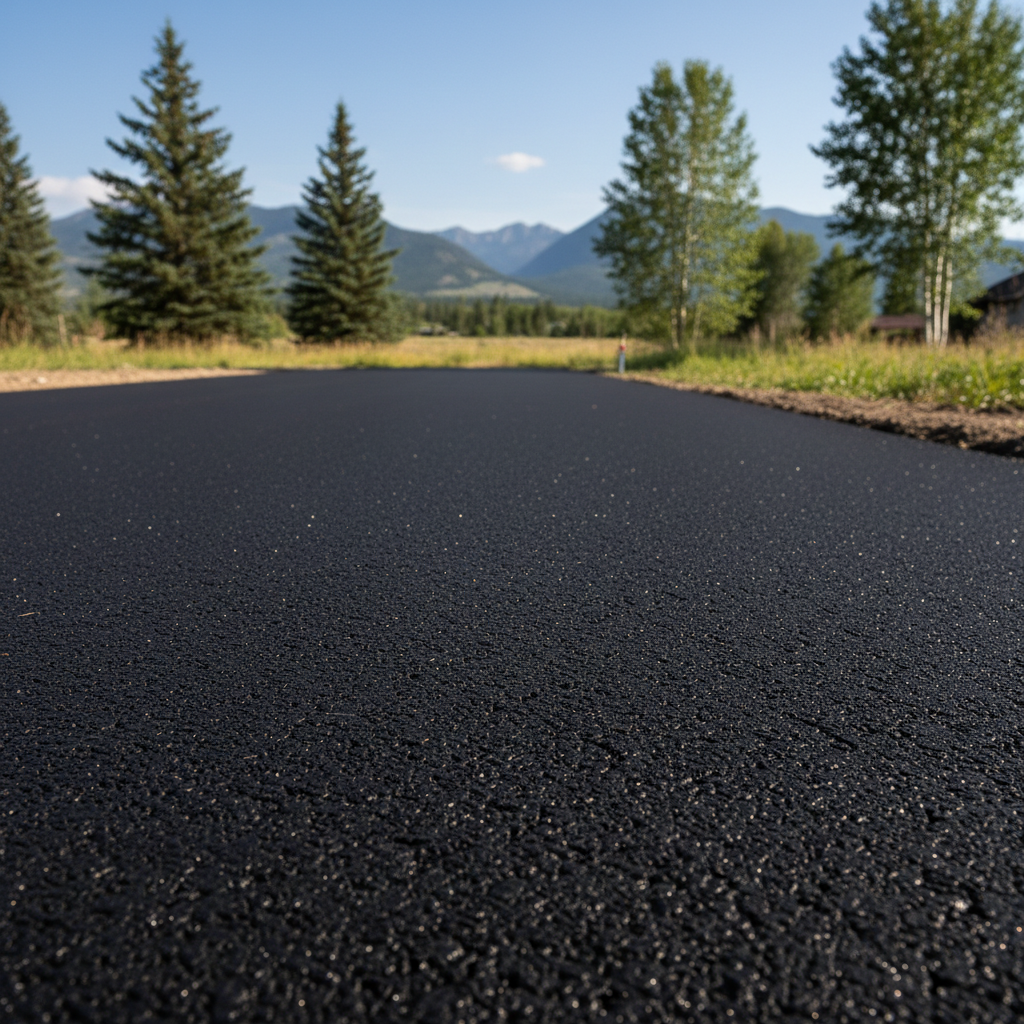
Being a homeowner means you've got a ton on your plate, and honestly, figuring out asphalt paving probably isn't high on your "fun things to do" list. But it's a big investment, right? So you want to make sure you're doing it right. I hear a lot of the same questions from folks all over Kalispell, so I figured I'd just put the answers down here. No fancy words, just the stuff you actually need to know.
How long does a new asphalt driveway usually last in Montana?
That's probably the question I get asked most often. A well-installed asphalt driveway, if you take care of it, should easily give you 15 to 20 years here in Kalispell. Now, that's not a guarantee set in stone, because a few things really affect how long it lasts. The quality of the initial installation is huge – a good, solid base is absolutely essential. If that's not right, you're going to see problems way sooner than later. Then there's the traffic it gets. A single-car driveway for a retired couple will hold up a lot longer than one for a family with four teenagers and a boat, wouldn't you say? And, of course, our Montana weather is a beast. Those freeze-thaw cycles we experience, especially in places like the Flathead Valley where we get a lot of moisture and wild temperature swings, really put stress on asphalt. Regular sealcoating every 2-3 years and fixing cracks quickly are key to hitting that 20-year mark.
What's the deal with drainage? How important is it for my driveway?
Drainage isn't just important; it's absolutely critical. I truly can't stress this enough. Water is asphalt's worst enemy. If water just sits on your driveway, it'll seep into tiny cracks, freeze, expand, and then thaw, creating bigger cracks and eventually potholes. We call it the freeze-thaw cycle, and it's brutal on pavement. When we're designing and putting in a driveway, we're always thinking about how to get water off it as fast as possible. That means making sure there's enough slope – usually at least 2% – to direct water away from your house, garage, and any low spots. Sometimes that means we need to install a drain or create a swale. If you've got a flat lot, or if your property has a high water table, like some of the areas closer to Flathead Lake, we really have to be extra careful with how we plan the grading. Get the drainage wrong, and you're looking at premature failure, no matter how good the asphalt mix is.
Can I really pave over an old concrete driveway?
You can, but it's not always the best idea, and it definitely comes with some serious warnings. People often ask this because they want to save money on removal. The biggest problem with paving over concrete is that concrete cracks. And those cracks, which we call reflective cracks, will almost certainly show up through your new asphalt layer over time. It's kind of like putting a band-aid over a broken bone – the problem underneath is still there. If you're really set on it, we'd need to check out the condition of the concrete first. If it's fairly stable with only minimal cracking, we might be able to patch it up, add an asphalt interlayer, and then pave. But if the concrete is badly cracked or heaving, you're usually better off just biting the bullet, removing the concrete, and starting fresh with a proper gravel base. You'll get a much longer-lasting result that way, trust me.
How long do I need to stay off a newly paved driveway?
Patience is a virtue, especially with new asphalt. We usually tell folks to stay off it completely for at least 24 to 48 hours, depending on the temperature. If it's a really hot day, it might need a little longer to cure and harden properly. Even after that initial period, you've got to be careful for the first week or so. Avoid parking heavy vehicles in the same spot for too long, and don't turn your steering wheel while the vehicle is stationary – those are called power steering marks, and they'll scuff up the fresh asphalt. Try to vary where you park for the first month if you can. Think of it like a new concrete sidewalk; it just needs time to set up and get tough. It's an investment, so treat it gently at first.
What causes potholes, and how are they fixed?
Potholes are usually a direct result of water getting into the asphalt layer and then freezing and thawing. When water seeps into cracks, it expands as it freezes, pushing the asphalt apart. When it thaws, it leaves a void, and then traffic drives over that weakened spot, causing the surface to collapse. It's a vicious cycle, especially with our winters here in Kalispell. Fixing them depends on their size and how bad they are. For smaller, isolated potholes, we can do a 'cut and patch' repair. That means we cut out the damaged section, clean it out, apply a tack coat, and then fill it with new hot asphalt, compacting it thoroughly. For areas with lots of potholes, or if the base material underneath is messed up, you might need a larger section removed and replaced, or even a full depth repair. The trick is to catch them early before they grow into craters.
Is there a 'best' time of year to get asphalt paving done in Kalispell?
Absolutely, timing is everything, especially in Montana. The sweet spot for asphalt paving in Kalispell is generally late spring through early fall – think May through September, sometimes into October if we get a mild stretch. We need consistent temperatures above 50 degrees Fahrenheit for the asphalt to lay down properly and cure correctly. If it's too cold, the asphalt cools too quickly, making it hard to compact properly, which leads to a weaker, less durable surface. If it's too hot, it can be too soft and track easily. We also need dry conditions. Paving on a wet sub-base is a recipe for disaster. So, while we're always working with the weather, aiming for those warmer, drier months gives you the best chance for a long-lasting, quality job. That's why Coastal Asphalt Solutions often books up quickly in those prime months.
How do I know if my driveway needs repair or a full replacement?
That's a question I get asked a lot, and it really comes down to how bad the damage is. If you've got isolated cracks, small potholes, or some minor surface deterioration, you're probably looking at repairs. Things like crack filling, patching, or even a sealcoat can extend the life of your driveway significantly. But if you're seeing widespread cracking – especially alligator cracking (that pattern of interconnected cracks that looks like alligator skin) – significant rutting, large areas of potholes, or if the driveway is heaving and sinking in multiple spots, you're likely past the point of simple repairs. These issues usually mean there's a problem with the base layer underneath, and at that point, you're just throwing good money after bad trying to patch it. A full replacement, where we remove the old asphalt, fix the base, and lay down new material, is often the most cost-effective solution in the long run. I can always come out and take a look to give you an honest assessment.